Monday Musings: Part 2: Visualize Your Dream Writing Life

You can find the first post in the series here: Monday Musings: LOA for Writers

Every bestselling novel began as an idea in someone’s mind. Many people don’t get beyond the idea. Your writing career can begin the same way but better — with clarity and visualization.

Let’s take a look at the numbers.
The odds of you finishing the writing of and publishing you book are often quoted as follows:

  • Only 3% of people who set out to write a novel actually finish a novel. To put that into context, the USA (pop 332M) is about 4% the population of the world (8B).
  • Less than 0.1% of people ever write a book, so we’re down from a worldwide population of 8B to 8M. That’s equivalent to New York City. It’s still a lot of people, but think of it like this: in the entire world, 7,992,000,000 will never write a single book.
  • The odds of getting a book traditionally published is around 1-2%.
  • The average traditionally published book sells around 3,000 copies over its lifetime, and less than 500 the first year.
  • A PUBLISHER breaks even on a $10,000 advance by selling around 1,000 copies. There are a lot of variables at play here, but an AUTHOR earns out on a $10,000 advance by selling more than 5,000 copies. Less than 25% of books “earn out” their advance.
  • What about best sellers? These numbers are clouded in secrecy but one estimation is that a book has to sell at least 10,000 copies during the FIRST WEEK to even have a shot at the NYT Best Seller list. Something like 0.08% of books published in the US annually (300,000) make the US Best Seller lists. To break this down, you have a better chance of winning the lotto (1 in 300M) and being struck by lightning twice (1 in 9M) than writing a book, getting it traditionally published, and making the Best Sellers list.

Sound discouraging? It shouldn’t. If you’ve finished a book you may already be in an elite class of only 3% of all the people who start a novel and actually finish it. If you’ve been traditionally published you may already be breathing even more rarified air.

Even so, almost any author will tell you that every book feels like writing for the first time. Many of us call it “imposter syndrome”. This is where visualization comes in. Visualization is mental rehearsal. When you picture your ideal writing life, your mind treats it as reality, preparing you for opportunities and because your mind treats all input as true, negative visualizations can bring negative influences, let these pass on by. They’re not for you.

There’s lots of ways to use visualization to create a writing life to help you succeed.

You can use:
A vision board
Journal prompts
Mantras
Meditations (guided or your own)
And more, find what works for you at this time

Try This:
picture yourself at a writing retreat
picture yourself opening a shipping box and holding your published book
imagine you’re doing a wildly successful book signing event
Imagine readers and fans reacting positively to your work
Imagine yourself as a best-selling author

Make your visualizations as detailed and vivid as possible. What are you teaching at the writing retreat? Who are you be hanging out with? Look at your hands note every detail then imagine them holding your book. Whose familiar faces do you see at your book signing cheering you on? FEEL the feeling of seeing that best seller tag on your book on Amazon, or the writeup about your best-selling book on Publishers Weekly.

Exercise:
Create a mini or digital vision board using magazine cutouts, Pinterest, or sketches. Include writing spaces, book covers, and images that represent the lifestyle you want. If you make the digital version, use the image as the wallpaper on your laptop or desktop.

When you clearly see your destination, the universe speeds towards you with what you need and desire to move you to your desired destination. You’ll notice new people who bring knowledge you need, events that put you on the path to your dreams and in the path of people who will be instrumental in your success; your vision board coming to life. Comment below about how you’re using visualization in your life.
Post Writers Conference Feels

The one writers conference I make a point to attend every year (not just because I’m the president) has ended and I am emerging from my post-conference coma. Pikes Peak Writers Conference 2025 was difficult in some ways and absolutely amazing in others. We had some people with loved ones in hospice or who had lost loved ones in the time immediately before or during conference. They were such troopers and they found themselves surrounded by the love and support of 200+ peers even if those peers didn’t know what was going on because PPWC has something unique and amazing that you can’t get at any other conference. There is an open, friendly, and supportive atmosphere that permeates every corner of every space we occupy in the hotel.

As president, my primary goal is to shake the hand of every attendee and help them understand that we are there to help and no questions is silly. You know you’re fulfilling your mission when you get feedback like “The level of positive support from everyone is simply unreal – Kudos to you all!” and “I’ve never felt more seen and supported as a writer!”

The level of positive support from everyone is simply unreal–kudos to you all!
– PPWC2025 Attendee

“I’ve never felt more seen and supported as a writer!

– PPWC2025 Attendee

Our keynote speakers were simply fabulous. USA Today bestselling author Avery Flynn put all the feels into her Friday welcome lunch keynote. New York Times bestselling author John Gilstrap reminded us that life is too short to squander the gift and talent we’ve been given in his Saturday night banquet dinner keynote. David R. Slayton gave a moving keynote at the farewell lunch about what it means to be a writer. In addition, all of our keynotes and our featured writers, Ricaro Fayette of Reedsy and the charming, award-winning kids and teen author Alexandra Diaz participated in a lively trivia game about one another during Saturday lunch in the Featured Authors versus Keynote Speakers game show. I had the change to have a meal each with Ricardo and Alexandra. Ricardo is one of the founders of Reedsy. He’s a calm and soft-spoken guy with an easygoing nature and deep marketing knowledge. Alexandra’s boundless love for writing colored most of our conversation and it was glorious.

Thank you to the amazing people who put together and presented a total of over 60 workshops at this year’s conference. These workshops are labors of love. No honorarium could cover that. The initial feedback has been overwhelmingly warm and positive. One of my own workshops garnered the attention of a college-level writing teacher who wants to add some of my material to his classes. You can’t see it, but my jaw just dropped again just writing about it. Especially because it was my first workshop given at conference to an unexpectedly standing-room-only room for a very niche topic.

There was a very dramatic moment where I misplaced my clicker and I briefly spun out. But I made myself go down for breakfast because I wanted to check on someone I knew was having a difficult time and that gave me the reset to go back to room and immediately find it right where I had put it but couldn’t see before. Has that ever happened to you?

Thanks to all the PPW staff that works tirelessly behind the scenes. Your ability to stay calm in the face of any degree of problem, remain professional, and to pivot to find the best answer in a flash is amazing! It was a privilege to watch you work. Thank you to the Author, Author bookstore who runs our conference bookstore.

The staff at the DoubleTree hotel in Colorado Springs worked hard to make sure everyone at our event got what they needed. Not a small feat. Special shoutout to the front desk, banquet staff, and bartenders (especially when 200+ people descend on the bar for barcon on Saturday night). Shoutout to Annie, Frank, Christina, Oznur, Jose, Angelica, Melissa, Natalie, Promise, Karla, Santana, Anthony, Kathena, Kacee, Genesis, Amanda S, Eric, Josselyn, Sambiri, Caden, JJ, Juliana, Chazlin, “Martini” and anyone else whose name we didn’t manage to capture. Thanks for looking after us.

Thank you to my amazing support group of one at home, my amazing husband, August, who brought me stuff I forgot; acted as chauffer, driving agents and editors back and forth from the airport, brought our dogs in for dog therapy on Saturday afternoon, and rearranged his tight schedule to help us out with a snafu at our storage unit. You are fantastic. I love you.

Next year’s conference is April 16-19. Saddle up and write with us! Keynote speakers include Mary Robinette Kowal, Marc Guggenheim, and Reavis Z. Wortham. Registration opens November 1, 2025! I’d love to see you there.

If you attended Pikes Peak Writers Conference 2025, please tell me about your experience in the comments. Thanks!

A New Pikes Peak Writers Anthology!

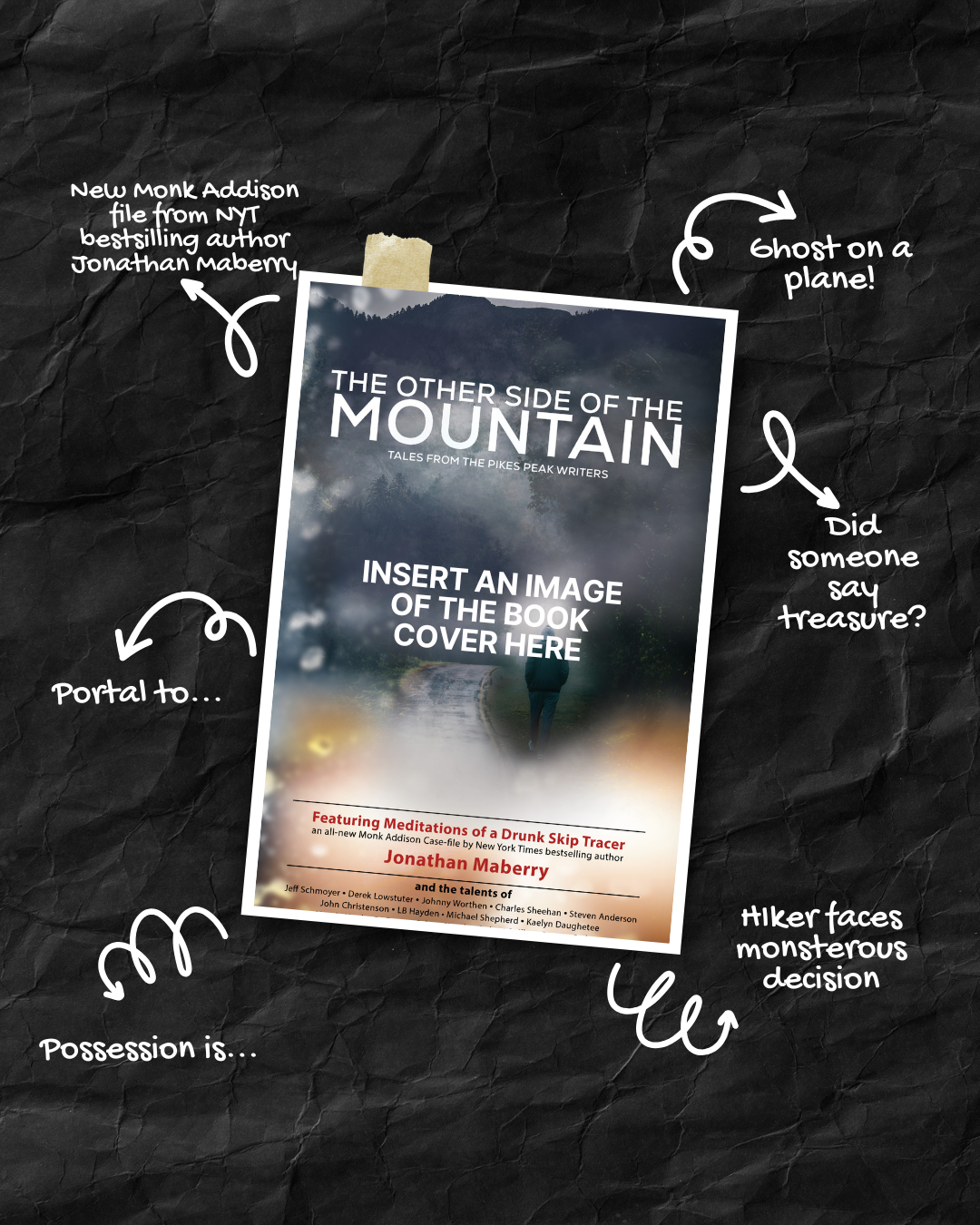
I’m so happy and proud to introduce Pikes Peak Writers fourth anthology, The Other Side of the Mountain. I had the honor of being the project manager for this anthology. I had the pleasure or working with a bunch of talented writers, three editors with superb insight, a fabulous book cover designer, and a formatter whose attention to detail and responsiveness was above and beyond. Working with New York Times bestselling author, our marquee author, Jonathan Maberry was a special honor. I learned a lot from this guy.

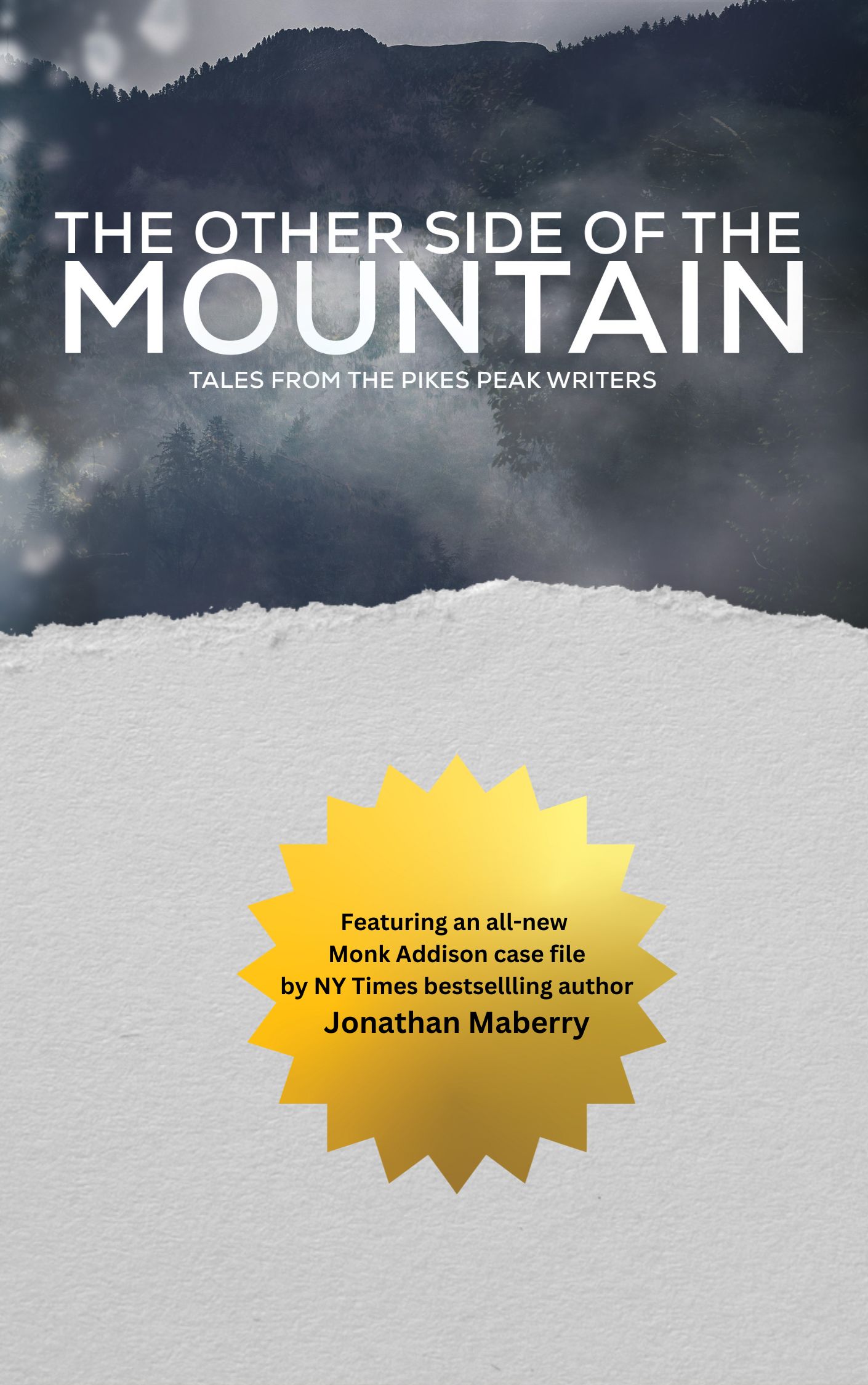
And with that, I give you, The Other Side of the Mountain: Tales from the Pikes Peak Writers.

Mountains take many forms, from physical to metaphorical. Sooner or later and more often than not, we all come upon some kind of mountain. Maybe you’re an aviator facing an unusual test. Can you see the portal and do you know where it leads? Maybe you’re a hiker facing a monstrous decision. Maybe danger erupts during your mining expedition. Did someone say treasure? Are we all just walking each other home? Do you hear singing? Could healing come from facing your biggest fear? What is “The Pocket Lips” and how do you stop it? The answers to these questions and much more await you within these pages including an incredible, brand-new story by New York Times bestselling author Jonathan Maberry.  

Come take a walk on The Other Side of the Mountain. We promise you’ll return safely…ish.

Special thanks to:
Deborah Brewer – Editor
Sam Knight – Editor
Eric Stallsworth – Copy Editor
Joshua Clark – Cover Design
Pam McCutcheon – Interior Design

Visit the Pikes Peak Writers website to find out more about this and PPW’s previous three anthologies.

Sneak Peek!

You were thinking it’s something earth-shattering you could take to social media with, but it’s not “earth-shattering” (what does that really mean anyway). It is, however, great news and something I’d happily let you take to social media with.

Today I posted the cover reveal for a project I’ve been working on for two years for Pikes Peak Writers. Shadowing my predecessor, Kathie Scrimgeour, in the first and taking over as the project manager in the second. Today I posted a cover sneak peak of the fourth of the Pikes Peak Writers Anthologies on our social media channels. Cover designer Joshua Clark did and outstanding job with our cover along with highlighting the authors of the short stories and a special Monk Addison file by none other than amazing Jonathan Maberry.

Edited by the fabulously talented team of James Sams, an accomplished anthology publisher in his own right; Deborah Brewer, on anthology editorial team since the first PPW anthology with an eye on everything; and Eric Stallsworth, award-winning speculative fiction writer, with an eye for detail any copyeditor would envy; these editors helped our authors make their stories the best they could be.

All of our staff and authors are members of Pikes Peak Writers. The purpose of the anthology is two-fold, to give PPW members a place to shine and to help members who are new writers learn about the submission and publishing process in a safe and trusted environment, including some of the bumps and skips they may run into along the way. We are proud of all our anthology authors and look forward to seeing more great work from them in the future. We also commend all the writers who submitted for their courage. It’s a scary thing, putting your creations out into the world. Don’t stop!

A Little about Pikes Peak Writers

Pikes Peak Writers is an all-volunteer writers organization led by an all-volunteer board of directors on which I humbly serve as president in addition to a number of volunteer positions I currently cover. We are committed to helping writers grow and thrive through education, outreach, and community as stated in our mission statement. The Anthology is just one of the many ways we fulfill that mission. We also host several events on a monthly basis, run a regular writing blog, and put on a conference every spring. If you’re a writer, I would encourage you to check our PPW. I’m not just the president, I’m a member!

To learn more about membership and our monthly events visit our website at pikespeakwriters.org and to learn more about and register for our annual conference coming up May 2-4 please visit conference.pikespeakwriters.org.

Stay tuned for a future post with the full cover reveal and a list of our contributing authors!

The Why, How, and Which of Writing Contests

Why Enter a Writing Contest

Humans have been creating contests since the dawn of time. Olympic athletes, your local sports teams, and every game show on TV are all forms of contests. However, the competitors in these contests all have one thing in common. Some kind of action. Writing contests are really no different even in requiring an entry fee, but more on that later.

What Can a Writing Contest Do for You?

  • Help you gain confidence as a writer through practice
  • Help you hone your writing skills
  • Critical acclaim when you win
  • Maybe even a cash prize

How to Enter a Writing Contest

Although entering a writing contest is pretty simple and straightforward there are some things to be considered:

  • Keep an eye on your favorites. Most writing contests are held one or more times per year, but you need to keep an eye on them so you don’t miss them. Just because they’re not accepting submissions at the moment doesn’t mean they won’t be in days, weeks, or months.
  • Turn in your best work. Well well-written and well-edited.
  • Use what you know. Don’t enter contests that aren’t in your wheelhouse/genre.
  • FOLLOW THE SUBMISSION GUIDELINES. Period. No exceptions.
  • Don’t enter blindly. Research the publication or organization sponsoring the contest. Read past issues and/or winners. Google for negative reviews.
  • Don’t submit the same piece to multiple contests at the same time.
  • If you win, great! Don’t forget to share your success and the organization/publication that gave it to you.
  • If not, try again. Whatever you do, don’t go badmouthing anyone. This is never a good look for anyone. Be professional.

A Few Words About Entry Fees

Although there are some writing contests out there that don’t require an entry fee most writing contests do from the weekly ReedsyPrompts to the nycmidnight flash fiction contest to Writers Digest Magazine to the Bookfest Awards.

Some of the most reputable writing contests that don’t require an entry fee include Writers and Illustrators of the Future, and Inkitt.

In fact, here is a list of more legitimate writing contests:

EcoLitBooks

Writing Battle

The Letter Review Prize for Short Fiction, Nonfiction, Poetry, Unpublished Books, and Art

The League of Utah Writers

Colorado State University offers more than one writing contest. Including this one for short stories.

ProWritingAid

Owl Canyon Press

Press 53, 53-Word Contest

Emily Dickinson First Book Award

The Young Lions Fiction Award

The Writer Games

Tadpole Press 100-Word Writing Contest

Tales

Queer Sci Fi Contest

Cranked Anvil Press Prompt Competition

Red Hen Press Ann Petry Award

Contemporary Voices of Indigenous Peoples Series

All the links above are a mere sampling of the many contests looking to connect with writers. A few last things to keep in mind:

  • Know your genre
  • Know exactly what your goals are. If you win, are you looking for recognition? Cash? Both?
  • Always, always, always follow the guidelines (yes, it bears repeating)
  • Don’t be too upset over rejections. It’s okay to be disappointed for a minute, but then shake it off, learn the lesson, and try again.
  • Now, get writing and editing and get to submitting.

Write On!

Previously published on Writing from the Peak, the Pikes Peak Writers Blog

Q&A with Horror Author Shannon Lawrence

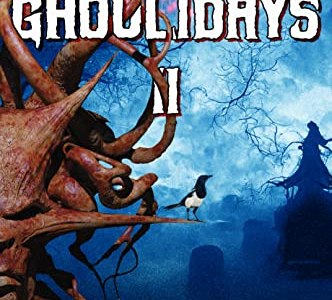
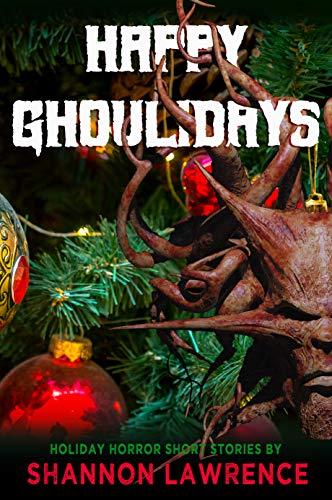
If you’re a horror fan and you haven’t read anything by Shannon Lawrence, you’re missing out. She is the author of four books of solo short stories full of chills, weirdness, and all manner of disturbing stuff that will keep you up at night. Her stories are featured in nearly forty anthologies. So when she came out with a book on how to do short stories right, people listened. Her latest addition to her solo horror collections, Happy Ghoulidays II, available via Barnes and Noble and Amazon, promises to be no exception.

BUT..what do we really know about the enigmatic short story force of nature that is Shannon Lawrence? Well, we know that she was in the car when a serial killer came after her mom in the 80s, has been nearly kidnapped a number of times as a kid, has been chased by a shark, and she writes all her short stories by hand. I wanted to know more (wouldn’t you?), so I posed some questions hoping to gain information that would allow us all to get to know the horror story powerhouse just a little bit better.

What literary pilgrimages have you gone on?

My favorite is probably The Stanley Hotel, which inspired King’s Overlook in The Shining. Not only have I stayed there, but had the movie running (they have a channel that runs the Kubrick film in a constant loop) while reading the book. And I wrote, of course, because it was a writing retreat. I love to go in February when it’s dead. Also, it’s an old hotel, and the ice slides off and makes the most terrifying sounds in the middle of the night, which is perfect at a haunted hotel.

What is your writing Kryptonite?

Depression. It has the ability to lock me down and make me unable to function, and therefore write (or do much else).

How did publishing your first story change your process of writing?

It energized me. I don’t think it changed my process, but it felt amazing, as did each acceptance afterward, and that kept me writing and submitting more.

What was the best money you ever spent as a writer?

Probably ISBNs for when I published my collections, because it ensured I kept my books in MY name, not Createspace’s or Amazon’s. As a seagull might say, “MINE!” I’d already given temporary first rights to those stories away. I had no desire to give any ownership to anyone else.

What are the most important websites/magazines/journals for writers to subscribe to?

An important website would be Duotrope if someone’s planning on submitting short stories. It’s an annual fee, and well worth it if you’re submitting enough stories.Otherwise, there’s a free website called Submission Grinder (at Diabolical Plots) that does the same thing. They may not have as many editors loading their publications as Duotrope, but it’s pretty close, so worth it if the annual Duotrope fee isn’t realistic for someone.

I also got Writer’s Digest for a while, but I learn more from other authors, I think, and I just never managed to make the time to read the magazine after a while. People are more honest about their processes on blogs and in personal conversation than when they write for Writer’s Digest for a paycheck. 

What’s your favorite under-appreciated novel?

I’m not really sure which novels are unappreciated. I love One Flew Over the Cuckoo’s Nest, though, and re-read it every little once in a while. It was made into a movie, so probably not underappreciated, but I haven’t actually talked to many people who read it versus seeing the movie, so I’m counting it! 

What was your hardest scene to write?

The death of a favorite character in a current WIP was hard to write. I didn’t want to let her go. I’ve written some pretty nasty things and plenty of hard things, but that’s freshest in my mind (because I’m in novel edits, and I JUST hit that scene today while editing, and it destroyed me all over again. And, of course, I knew it was coming, and started getting upset before it happened.)

What does literary success look like to you?

A growing readership. Each new person who discovers a story of mine and says something about it is a reminder of why I do this. Each story that sticks with someone is a success. Any time someone recommends a book or story of mine is a success. Each accomplishment, like an acceptance or a publication is another piece of success. My goals evolve, but the things that feel good and tell me I’m heading in a positive direction are the ones that matter.

Have you read anything that made you think differently about fiction?

Oh, I’m sure I’ve read many things that have impacted how I think about fiction, but I can’t think of an example. I feel like every good book I read tweaks how I feel in some way. Writers should be reading and learning and changing as they progress. I will say that The Handmaid’s Tale changed how I defined horror, and that set me in a new direction of learning what true horror was, because, in general, horror gets significantly pigeonholed in inaccurate ways. It was actually a piece by Nightmare Magazine listing the Top 100 Horror Novels, and when I started, there were novels that made me say, “This isn’t horror.” The Handmaid’s Tale made me pay attention to how wrong I was before. A lot of people wouldn’t consider it horror. Nightmare Magazine did. I do. Any woman who reads it should. Any man who cares about women must. And the thing is, when I started looking into the definition of horror, I found that places like the Horror Writer’s Association already preached that wider definition of horror. It’s just that so many people base their definition on slashers and Stephen King, which is limiting and erroneous. It’s so much more than that and, as it turns out, every book on that list was horror. I just needed to open my mind and learn. (Which doesn’t mean I liked every book on the list, though I’d like to go back and read the ones I bucked against and see what I think now.)

Do you hide any secrets in your books that only a few people will find?

here are references that people may get. For example, one of my earlier stories was anti-fan-fiction to a Hemingway story I had to spend way too much time with in middle school. Something like that, where it just depends on whether someone has experienced something or maybe sees something in a similar way to the way I do can be fun. It’s such a kick when someone contacts me to say they saw it (“Was this story based on Hemingway Novel X?”)

As a writer, what would you choose as your mascot/avatar?

My mascot would probably be a snake, the thing that both fascinates and terrifies me (in a phobic sense). I finally put one in this book, actually! I’m sure it won’t be the last time.

A fan of all things fantastical and frightening, Shannon Lawrence writes primarily horror and fantasy. Her stories can be found in over forty anthologies and magazines, and her three solo horror short story collections, Blue Sludge Blues & Other AbominationsBruised Souls & Other TormentsHappy Ghoulidays are available now along with her nonfiction book, The Business of Short Stories. You can also find her as a co-host of the podcast “Mysteries, Monsters, & Mayhem.” When she’s not writing, she’s hiking through the wilds of Colorado and photographing her magnificent surroundings, where, coincidentally, there’s always a place to hide a body or birth a monster.

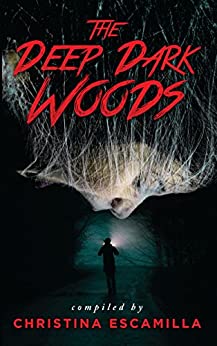
Want to learn more about Shannon and her books? Visit her website, The Warrior Muse to sign up for her newsletter and get the latest info on anthologies she’s been featured in such as The Deep Dark Woods seen above, and book releases.

Book Review: The Gaiad

the-gaiad

In a society increasingly buried under the weight of its own insularity, an ancient and shadowy group selfishly guards a secret with the power to change everything. Tonight, on a stage in front of thousands, one of their members commits a horrible, shocking act. In the audience is Detective Fleur Romano. Bitter and world-weary, she vows to uncover the reasons behind the horror she just witnessed. In the process, she’ll discover that she’s led her lonely life ignorant a fundamental truth, a truth first discovered by a man who walked the earth millennia ago, a man mysteriously familiar.

In this powerful debut, William Burcher is willing to explore unique and fantastic themes with realism and grit. The GAIAD boldly poses big questions. What do we lose, as we separate ourselves from the earth and each other? What would the future hold, if suddenly something changed with that most fundamental of relationships—the one we have with our own planet?

Three Stars

three-stars

An original storyline based on a big idea.

The Gaiad’s intriguing premise is what brought me to it after meeting the author at a local writer’s event. Burcher tackles big, societal questions and challenges how we might think about our planet and our relationship with it through the eyes of a somewhat jaded police detective, the secret society she is about to come in violent contact with, and members of a civilization who lived their lives in a much simpler way that was more in harmony with the earth and her gifts.

Overall the writing is good. There were some awkward sentence structure issues and a couple of sudden instances of profanity that didn’t seem to mesh smoothly with the general theme and plot to me. Especially when uttered by the ancient people in the book. No, I’m not some prude who can’t handle a little profanity. This is where the three stars come in. The Gaiad is a good book with a great plot. The few things that pulled me out of the book were not nearly enough for a sub-par rating.

If you’re into alternative philosophies, thrillers, mysteries, and secret societies, I would encourage you to give this book a read.

Remember, just because this book wasn’t quite my cup of tea with crumpets on a beautiful spring day in an English garden, doesn’t mean it’s not yours. As it goes with any book, if it sounds interesting to you READ IT! Then help the author out and kindly REVIEW IT! Reviews are critical to any writer’s success.

If you’ve read The Gaiad, feel free to let me know what you thought. Let’s discuss.


Book Review: The Scarlet Deep

The Scarlet Deep

On the waves of the North Atlantic, a poison spreads, sapping the life from humans and striking madness into immortals.

Patrick Murphy, the immortal leader of Dublin, has been trying to stem the tide of Elixir washing into his territory, but nothing seems to stop the vampire drug. While others in the immortal world work to cure the creeping insanity that Elixir threatens, Murphy has been invited to London to join a summit of leaders hoping to discover who is shipping the drug. If Murphy and his allies can cut off the supply, they might be able to halt the spread long enough for a treatment to be found for the humans and vampires infected.

Anne O’Dea, Murphy’s former lover, retreated from public life over one hundred years ago to help immortals in need… and to heal her own broken heart. Though powerful connections keep her insulated from the violence of vampire politics, even Anne is starting to feel the effects of Elixir on her isolated world. The human blood supply has been tainted, and with Anne’s unique needs, even those closest to her might be in danger. Not just from infection, but Anne’s escalating bloodlust.

When Anne and Murphy are both called to London, they’re forced to confront a connection as immortal as they are. As they search for a traitor among allies, they must also come to terms with their past. Behind the safe facade of politics, old hungers still burn, even as an ancient power threatens the fate of the Elemental World.

From paranormal romance/romance writer Elizabeth Hunter, author of the Elemental Mysteries, Irin Chronicles, and Cambio Springs series comes the latest installment in the Elemental World series. I’m so thrilled to have been selected to receive an unconditional Advanced Reader Copy of The Scarlet Deep.

Elizabeth Hunter’s Elemental World is dark, dreamy, action packed and pretty damned steamy. Romance vampire style is serious business, even after 100 years of separation, but I get ahead of myself.

First, I will say that although the book is entertaining by itself, you will get much deeper satisfaction out of it if you read the Elemental Mysteries and the first two books in the Elemental World series. Go ahead. I will still be here. And if you’re a paranormal romance fan, you won’t be sorry. If you’ve been waiting for The Scarlet Deep, you have not been waiting in vain.

Okay, now that you’re prepared. Guess what? Chaos, doom, mystery, political intrigue, broken-furniture-love-making, sass, and maybe even a few tears are in store. That’s vampires for you. Never a dull moment…except when they’re sleeping…then they’re like….dead.

Elizabeth Hunter’s writing has a way of worming it’s way into your brain and pulling you into the story. Her books are the kind that you set down (if you can set it down before devouring the whole thing in one sitting) and feel like you’ve suddenly surfaced from another dimension, another world. It takes a minute to focus on reality, shake off the vivid elemental world, and remember when you last ate. This book is no different and when you finish, you’re already trying to figure out how to get your hands on the next book.

Like Elixir, these books are addictive and The Scarlet Deep is no exception. Vibrant writing, compelling characters, and an imaginative and yet coherent story give The Scarlet Deep and Hunter’s other books an otherworldly believeability that will hold on to you and not let go.

It’s a good thing books don’t have calories because after being introduced to the sassy Anne O’Dea and the magnetic scoundrel, Patrick Murphy sparks are going to fly and you’re probably going to be doing some binge-reading.

Look for The Scarlet Deep on retail book sites like amazon.com, Barnes & Noble, and Kobo. Pre-ordering is open and the book is set to release July 7, 2015.

Feel free to let me know what you thought of The Scarlet Deep by commenting below, even if you don’t agree with my opinion.

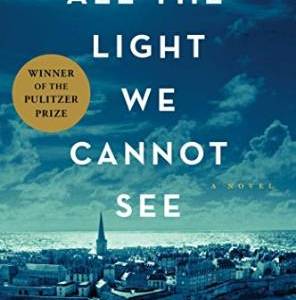
Book Review: All the Light We Cannot See

All the Light We Cannot See

I know, this one’s been around for a while and I’m a little late.

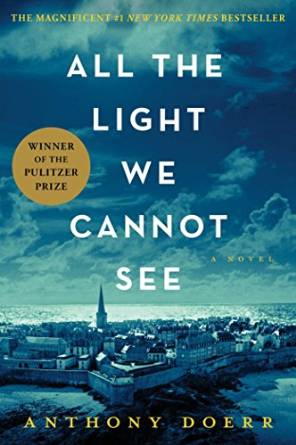
All the light we cannot See garnered a Pulitzer Prize for New York Times Bestselling author Anthony Doerr. It’s not his first award, but it may be the most recognizable. My feelings about this book are <dramatic pause> complicated.

On the one hand I can appreciate it for the Pulitzer Prize winning novel that it is. On the other hand I found it a little tedious. So let’s get a few preliminary things out of the way. First, I avoided reading any reviews or opinions about this novel before I read it. I didn’t want any preconceived notions going in. Second, historical novels, especially those set in the middle of a war are not really my cup of tea. Third, I’m not a very patient person when it comes to getting to the point. That being said, I still appreciate it for what it is, a beautiful work of art in the form of words.

The story is about a blind French girl fleeing the war and a German boy drafted into the ranks of the German Nazi army. The convergence of their paths in occupied France is heartbreakingly beautiful as both try to survive the devastation of World War II.

Despite her blindness, 14-year-old Marie Laure lives in a world with rich and vibrant colors provided by her other senses and her glorious imagination. Her father nurtures her curiosity and builds up her independence every chance he gets. He tries to save her from the ravages of WWII by taking her to her great uncle’s house in the seaside city of Saint-Malo. Her father tries to protect her and help her understand her new surroundings. In the process, he is taken prisoner by the Germans. Losing the people who support her one by one, Marie does her best to survive the hardships of war as it inexorably marches toward her.  Then there’s her father’s secret that she must keep safe, but should she?

Werner is an orphan recruited into a brutal branch of the Hitler youth army and torn from his only family, his sister. His childhood obsession with radios and other gadgets attracts the attention of a German engineer at the Nazi youth school. Soon he is out in the field tracking down forbidden radio signals all over Russia and Europe, which leads him to Saint-Malo where his world collides with Marie’s in the middle of the occupation of the city by German forces followed by its liberation by allied forces. Yet Werner’s punishing training never destroys the tenderness in his heart, perhaps causing him some extra pain.

I said that historical war stories are really not my thing whether fictional or not. However, I would still maintain that this one is heartbreakingly beautiful. Although the story jumps between characters and flashbacks at break-neck speed, I was usually able to follow fairly easily. The couple of times I was lost for a moment I kind of felt like it added to the tumultuous times I was reading about and caused me to sympathize. Especially with Marie.

Some have spoken about this book being full of “purple prose”, that is to say, ornate and extravagantly overly descriptive writing. In general, that may be true and a no, no for writers. BUT in this case, I think it works. All the Light We Cannot See couples beautifully flowing, vibrant, and colorful writing against the stark, chilling, and gruesome background of WWII in a way that is compelling and full of emotion. If no one ever broke the rules, we’d never know what freedom can feel like. The statement applies to life as much as it does to writing. The trick is, knowing when and how to do it.

I thought I’d be glad when this book was over. Yet in the end, it was one of those stories that left a kind of aching emptiness in its wake.

5/5 Stars
5/5 Stars for beauty and character

2015 Pikes Peak Writers Conference: What a Blast!

Two days after conference I am finally getting my bearings again. I go to a writers conference to learn and to connect like most everyone else. Like most everyone else I work my ass off doing it. 14 hours of workshops, 7 hours of connecting and schmoozing whilst having a meal and several more cocktail hours of connecting and schmoozing. All this over the course of a three-day weekend (there is a fourth, optional day on Thursday that I didn’t participate in). By Sunday morning I am usually hiding behind copious amounts of coffee, overstimulated, exhausted, and walking around in a bit of a fog.  At the same time I am content and happy to be among my people all weekend and thrilled with the learning experience. I noticed several others in the same condition. I tell people it’s like going to Hogwarts. Well, I think there is a clear correlation anyway.

Conference Experience

The Pikes Peak Writers Conference (PPWC) is known as the friendliest conference in the country and ranks as one of the top ten writers conferences in the U.S. This year the conference earned attendees from as far away as Ireland. So is it true? Is PPWC the friendliest writers conference in the nation? You betcha! This was my second year at conference. I was so overwhelmed my first year I kept to my workshops and didn’t talk with much of anybody. That was not for lack of trying on the staff’s part. PPWC staff made me feel so welcome and comfortable that first year that when I returned this year I made nearly two dozen connections including authors, publishers, and editors in several different genres. I practically felt like an old pro at this conference stuff.

Registration is a breeze, swag bags are awesome (this year included a free book!), and if you even think that you might be feeling lost or overwhelmed there is always someone nearby to help you out. In fact, they may know you need help before you do. Most likely they have been there and done that.

How friendly are these people. Well, I walked up to a keynote speaker’s table and asked if a seat was taken. Staff members piped up trying to gently tell me the table was reserved when I saw the sign. I played it off with some clever comment (at least I hoped it was clever) and ended up being complimented on my “radio voice” (I was a little hoarse that day). No snooty upturned noses, no rude comments or questioning of my cranial fortitude. No, instead I was complimented.

 Speakers

Holy cow, the speakers! Move over Tony Robbins. Get out of the way Zig Zigler. Find a new gig Mike Dooley. Meet the 2015 PPWC speakers, Mary Kay Andrews, Andrew Gross, R.L. Stine (I call him Bob), and Seanan McGuire! All wonderful authors, highly inspiring, with impressive histories, and individual flair and styles all their own. If you’re not motivated about your writing by the time these people are done with you, you need to find something else to do with yourself. You should have heard some of Bob’s fan letters, hysterical!

 Workshops

There are up to six workshops going on at any given time between breakfast and dinner. Open and closed critique groups and speaker panels round out this portion of the conference. Authors, editors, agents, and specialists present workshops on everything from craft to the business of writing. Tough stuff like plotting, keeping the pages turning, query letters, what agents are really looking for, platform building, how the process of writing a book and getting published works and many more. My best advice, fork over the cash for a recording so you can get all the fabulous workshops you’re going to miss while attending to your priorities or stuff that’s not recorded. So many talented people including Barbara (Samuel) O’Neal, Josh Vogt, Robert Spiller, Angie Hodapp, Cara Lopez Lee, Kevin IkenberryLaura DiSilverio, Liz Pelletier, and many more! Once again, if you’re not on fire about your writing after these people are done with you, you need to find something else to do. Maybe even check to see if you still have a pulse. Just sayin’. No, there is not Kool Aid.

 The Zebulon

The Zebulon is a comprehensive writing contest that includes a rounded list of genres and mimics the process of submitting a story for publication…only much faster. You can purchase a critique of your story and you will receive a scorecard so you can identify your strong points and work on the areas you’re not so strong in, including your query letter. So worth the small investment.

 Start Saving Up Now

So much more is available including query 1-on-1 and professional headshots as well as a book store. Then there’s the friends, comradery, and priceless moments to be had at every turn. This year there was even a ghost hunt. I save up all year just to go to this conference. I suggest you do the same and I’ll see you next year! There is a payment plan, so there’s not much of an excuse. I met writers of all kinds from erotica to nonfiction and everything between.

If you’re a writer and wondering if a conference is something you should do, let me save you the trouble. As the Nike ad says “Just Do It”. It could be one of the best decisions you could make about your writing career. Until Next year, adieu, magical PPWC. Back to the muggle world for now.

As always, feel free to drop comments or questions below and discuss. Love to see what you think.