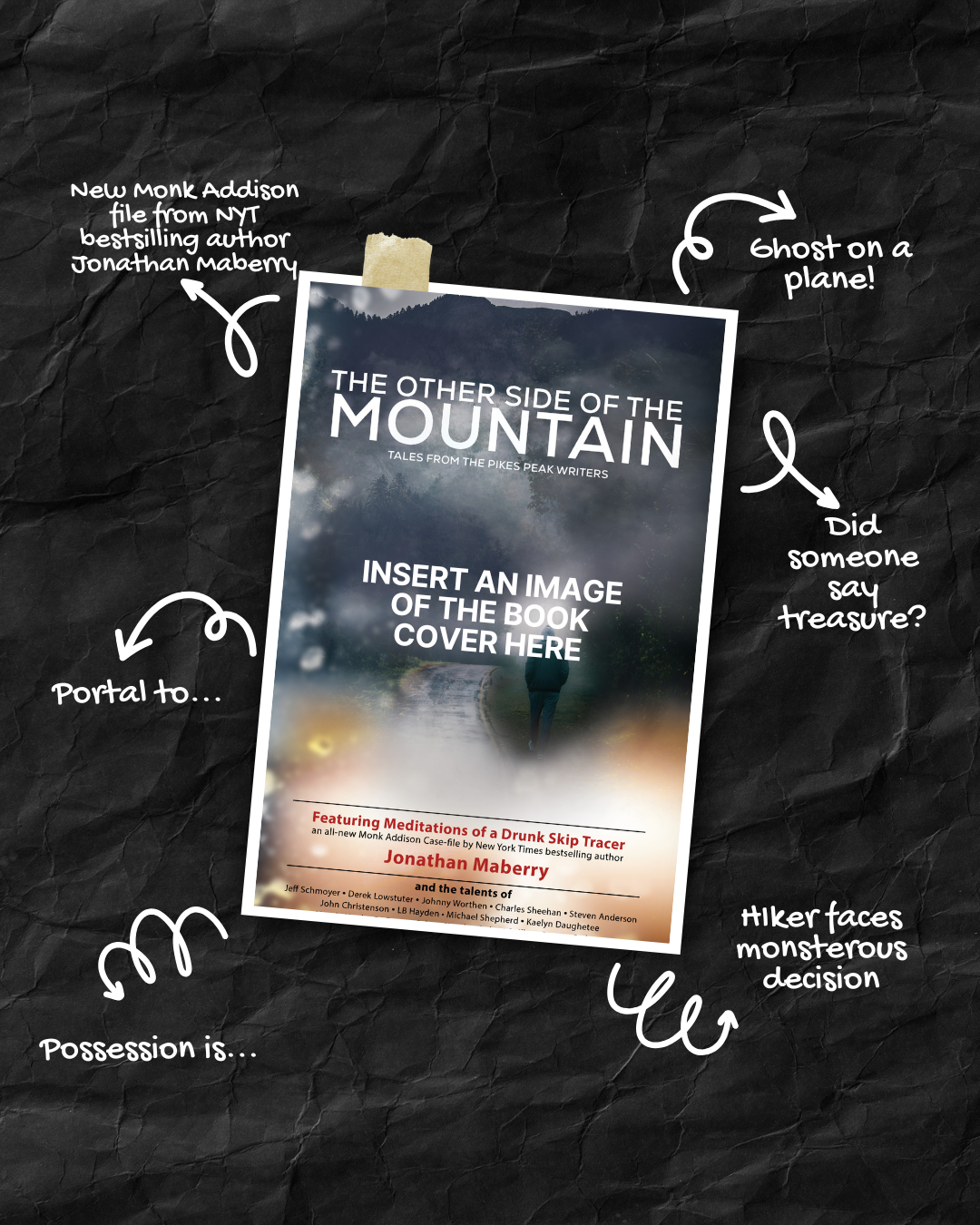
I’m so happy and proud to introduce Pikes Peak Writers fourth anthology, The Other Side of the Mountain. I had the honor of being the project manager for this anthology. I had the pleasure or working with a bunch of talented writers, three editors with superb insight, a fabulous book cover designer, and a formatter whose attention to detail and responsiveness was above and beyond. Working with New York Times bestselling author, our marquee author, Jonathan Maberry was a special honor. I learned a lot from this guy.
Mountains take many forms, from physical to metaphorical. Sooner or later and more often than not, we all come upon some kind of mountain. Maybe you’re an aviator facing an unusual test. Can you see the portal and do you know where it leads? Maybe you’re a hiker facing a monstrous decision. Maybe danger erupts during your mining expedition. Did someone say treasure? Are we all just walking each other home? Do you hear singing? Could healing come from facing your biggest fear? What is “The Pocket Lips” and how do you stop it? The answers to these questions and much more await you within these pages including an incredible, brand-new story by New York Times bestselling author Jonathan Maberry.
Come take a walk on The Other Side of the Mountain. We promise you’ll return safely…ish.
Special thanks to: Deborah Brewer – Editor Sam Knight – Editor Eric Stallsworth – Copy Editor Joshua Clark – Cover Design Pam McCutcheon – Interior Design
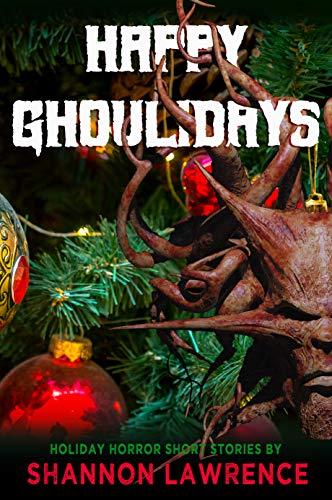
If you’re a horror fan and you haven’t read anything by Shannon Lawrence, you’re missing out. She is the author of four books of solo short stories full of chills, weirdness, and all manner of disturbing stuff that will keep you up at night. Her stories are featured in nearly forty anthologies. So when she came out with a book on how to do short stories right, people listened. Her latest addition to her solo horror collections, Happy Ghoulidays II, available via Barnes and Noble and Amazon, promises to be no exception.
BUT..what do we really know about the enigmatic short story force of nature that is Shannon Lawrence? Well, we know that she was in the car when a serial killer came after her mom in the 80s, has been nearly kidnapped a number of times as a kid, has been chased by a shark, and she writes all her short stories by hand. I wanted to know more (wouldn’t you?), so I posed some questions hoping to gain information that would allow us all to get to know the horror story powerhouse just a little bit better.
What literary pilgrimages have you gone on?
My favorite is probably The Stanley Hotel, which inspired King’s Overlook in The Shining. Not only have I stayed there, but had the movie running (they have a channel that runs the Kubrick film in a constant loop) while reading the book. And I wrote, of course, because it was a writing retreat. I love to go in February when it’s dead. Also, it’s an old hotel, and the ice slides off and makes the most terrifying sounds in the middle of the night, which is perfect at a haunted hotel.
What is your writing Kryptonite?
Depression. It has the ability to lock me down and make me unable to function, and therefore write (or do much else).
How did publishing your first story change your process of writing?
It energized me. I don’t think it changed my process, but it felt amazing, as did each acceptance afterward, and that kept me writing and submitting more.
What was the best money you ever spent as a writer?
Probably ISBNs for when I published my collections, because it ensured I kept my books in MY name, not Createspace’s or Amazon’s. As a seagull might say, “MINE!” I’d already given temporary first rights to those stories away. I had no desire to give any ownership to anyone else.
What are the most important websites/magazines/journals for writers to subscribe to?
An important website would be Duotrope if someone’s planning on submitting short stories. It’s an annual fee, and well worth it if you’re submitting enough stories.Otherwise, there’s a free website called Submission Grinder (at Diabolical Plots) that does the same thing. They may not have as many editors loading their publications as Duotrope, but it’s pretty close, so worth it if the annual Duotrope fee isn’t realistic for someone.
I also got Writer’s Digest for a while, but I learn more from other authors, I think, and I just never managed to make the time to read the magazine after a while. People are more honest about their processes on blogs and in personal conversation than when they write for Writer’s Digest for a paycheck.
What’s your favorite under-appreciated novel?
I’m not really sure which novels are unappreciated. I love One Flew Over the Cuckoo’s Nest, though, and re-read it every little once in a while. It was made into a movie, so probably not underappreciated, but I haven’t actually talked to many people who read it versus seeing the movie, so I’m counting it!
What was your hardest scene to write?
The death of a favorite character in a current WIP was hard to write. I didn’t want to let her go. I’ve written some pretty nasty things and plenty of hard things, but that’s freshest in my mind (because I’m in novel edits, and I JUST hit that scene today while editing, and it destroyed me all over again. And, of course, I knew it was coming, and started getting upset before it happened.)
What does literary success look like to you?
A growing readership. Each new person who discovers a story of mine and says something about it is a reminder of why I do this. Each story that sticks with someone is a success. Any time someone recommends a book or story of mine is a success. Each accomplishment, like an acceptance or a publication is another piece of success. My goals evolve, but the things that feel good and tell me I’m heading in a positive direction are the ones that matter.
Have you read anything that made you think differently about fiction?
Oh, I’m sure I’ve read many things that have impacted how I think about fiction, but I can’t think of an example. I feel like every good book I read tweaks how I feel in some way. Writers should be reading and learning and changing as they progress. I will say that The Handmaid’s Tale changed how I defined horror, and that set me in a new direction of learning what true horror was, because, in general, horror gets significantly pigeonholed in inaccurate ways. It was actually a piece by Nightmare Magazine listing the Top 100 Horror Novels, and when I started, there were novels that made me say, “This isn’t horror.” The Handmaid’s Tale made me pay attention to how wrong I was before. A lot of people wouldn’t consider it horror. Nightmare Magazine did. I do. Any woman who reads it should. Any man who cares about women must. And the thing is, when I started looking into the definition of horror, I found that places like the Horror Writer’s Association already preached that wider definition of horror. It’s just that so many people base their definition on slashers and Stephen King, which is limiting and erroneous. It’s so much more than that and, as it turns out, every book on that list was horror. I just needed to open my mind and learn. (Which doesn’t mean I liked every book on the list, though I’d like to go back and read the ones I bucked against and see what I think now.)
Do you hide any secrets in your books that only a few people will find?
here are references that people may get. For example, one of my earlier stories was anti-fan-fiction to a Hemingway story I had to spend way too much time with in middle school. Something like that, where it just depends on whether someone has experienced something or maybe sees something in a similar way to the way I do can be fun. It’s such a kick when someone contacts me to say they saw it (“Was this story based on Hemingway Novel X?”)
As a writer, what would you choose as your mascot/avatar?
My mascot would probably be a snake, the thing that both fascinates and terrifies me (in a phobic sense). I finally put one in this book, actually! I’m sure it won’t be the last time.
A fan of all things fantastical and frightening, Shannon Lawrence writes primarily horror and fantasy. Her stories can be found in over forty anthologies and magazines, and her three solo horror short story collections, Blue Sludge Blues & Other Abominations, Bruised Souls & Other Torments, Happy Ghoulidays are available now along with her nonfiction book, The Business of Short Stories. You can also find her as a co-host of the podcast “Mysteries, Monsters, & Mayhem.” When she’s not writing, she’s hiking through the wilds of Colorado and photographing her magnificent surroundings, where, coincidentally, there’s always a place to hide a body or birth a monster.
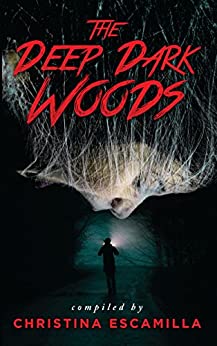
Want to learn more about Shannon and her books? Visit her website, The Warrior Muse to sign up for her newsletter and get the latest info on anthologies she’s been featured in such as The Deep Dark Woods seen above, and book releases.
In a society increasingly buried under the weight of its own insularity, an ancient and shadowy group selfishly guards a secret with the power to change everything. Tonight, on a stage in front of thousands, one of their members commits a horrible, shocking act. In the audience is Detective Fleur Romano. Bitter and world-weary, she vows to uncover the reasons behind the horror she just witnessed. In the process, she’ll discover that she’s led her lonely life ignorant a fundamental truth, a truth first discovered by a man who walked the earth millennia ago, a man mysteriously familiar.
In this powerful debut, William Burcher is willing to explore unique and fantastic themes with realism and grit. The GAIAD boldly poses big questions. What do we lose, as we separate ourselves from the earth and each other? What would the future hold, if suddenly something changed with that most fundamental of relationships—the one we have with our own planet?
Three Stars
An original storyline based on a big idea.
The Gaiad’s intriguing premise is what brought me to it after meeting the author at a local writer’s event. Burcher tackles big, societal questions and challenges how we might think about our planet and our relationship with it through the eyes of a somewhat jaded police detective, the secret society she is about to come in violent contact with, and members of a civilization who lived their lives in a much simpler way that was more in harmony with the earth and her gifts.
Overall the writing is good. There were some awkward sentence structure issues and a couple of sudden instances of profanity that didn’t seem to mesh smoothly with the general theme and plot to me. Especially when uttered by the ancient people in the book. No, I’m not some prude who can’t handle a little profanity. This is where the three stars come in. The Gaiad is a good book with a great plot. The few things that pulled me out of the book were not nearly enough for a sub-par rating.
If you’re into alternative philosophies, thrillers, mysteries, and secret societies, I would encourage you to give this book a read.
Remember, just because this book wasn’t quite my cup of tea with crumpets on a beautiful spring day in an English garden, doesn’t mean it’s not yours. As it goes with any book, if it sounds interesting to you READ IT! Then help the author out and kindly REVIEW IT! Reviews are critical to any writer’s success.
If you’ve read The Gaiad, feel free to let me know what you thought. Let’s discuss.






 K.A. Olgren Stories 'n' More