Humans have been creating contests since the dawn of time. Olympic athletes, your local sports teams, and every game show on TV are all forms of contests. However, the competitors in these contests all have one thing in common. Some kind of action. Writing contests are really no different even in requiring an entry fee, but more on that later.
What Can a Writing Contest Do for You?
Help you gain confidence as a writer through practice
Help you hone your writing skills
Critical acclaim when you win
Maybe even a cash prize
How to Enter a Writing Contest
Although entering a writing contest is pretty simple and straightforward there are some things to be considered:
Keep an eye on your favorites. Most writing contests are held one or more times per year, but you need to keep an eye on them so you don’t miss them. Just because they’re not accepting submissions at the moment doesn’t mean they won’t be in days, weeks, or months.
Turn in your best work. Well well-written and well-edited.
Use what you know. Don’t enter contests that aren’t in your wheelhouse/genre.
FOLLOW THE SUBMISSION GUIDELINES. Period. No exceptions.
Don’t enter blindly. Research the publication or organization sponsoring the contest. Read past issues and/or winners. Google for negative reviews.
Don’t submit the same piece to multiple contests at the same time.
If you win, great! Don’t forget to share your success and the organization/publication that gave it to you.
If not, try again. Whatever you do, don’t go badmouthing anyone. This is never a good look for anyone. Be professional.
Recently hubby and I went to see Guardians of the Galaxy Vol. 3 at Roadhouse Cinema here in Colorado Springs. Maybe I wasn’t in the right frame of mind, maybe it was the fact that we waited over an hour for our food while everyone around us got theirs on time, maybe it was my own triggers, maybe it was because we were sitting so close to the screen in the front row making the action so much larger than life, or maybe there really was excessive depictions of animal and child cruelty. In any case, I didn’t enjoy it. Not. One. Bit. And I really wanted to. Which Ironically means it was a good movie.
What was this Movie About?
The latest installment of the GotG saga gives us the story of the genius and enigmatic, Rocket. Rocket doesn’t talk about his past. Turns out it’s brutal. In fact, Nebula says what was done to rocket was worse that what her father, Thanos did to her. If you have issues with animal or child cruelty, you might want to reconsider seeing this one. As the dog and cat mom of rescue animals, I couldn’t disengage from the triggering effects of repeated cruelty shown on the screen.
Did I say “repeatedly”?
Oh, yes, I see I did.
Rocket is near death after he’s attacked by one of the Sovereign tasked with bringing him back to High Evolutionary who engineered both the Sovereign and Rocket. Rocket escaped High Evolution while he was still a kit after his “modifications” made him too smart for his own good, or the good of the rest of his group of modified ‘lower beings”. And so Starlord and what’s left of his crew after “the snap” organizes a rescue mission involving getting the code for Rocket’s kill switch from High Evolutionary so they can repair his body and save him. Much mayhem ensues because…GotG.
The movie had all the flashy effects, adventure, and a little of the comedic factor (which fell rather flat) that I’ve come to expect from GotG, but it was totally overshadowed. There was entirely too much suffering. It seems to be the newest thing in modern films. There was no sense of wonder, no light and the script seemed formulaic at best and the abilities of each character are inconsistent an conflicting.
Why Is GotG Vol. 3 A Good Movie?
Because it made grown-ass adults cry. I heard the sniffles from all over the theater. How does that make it a good movie? Much like me, the other people who were sniffling couldn’t suspend their empathy response to Rocket’s tortured past. The love lost between Peter and Gamora is sad and pales in comparison, never progressing in any meaningful way. And yet, many people think it’s a fabulous flick. Maybe that’s because of the usual spectacular effects or a favorite cameo such as Nathan Fillion as Master Karja. But I was prepared for a ridiculous and fun space ride and ended up watching a movie that continually threw the torture of Rocket, his friends, and even kids at me. However, because it elicited such a strong emotional response and as a writer who is always watching with one eye on the mechanics of the story, I still have to say it was a good movie. Just maybe not for people like me who were expecting fun, not a sad, tear-jerker.
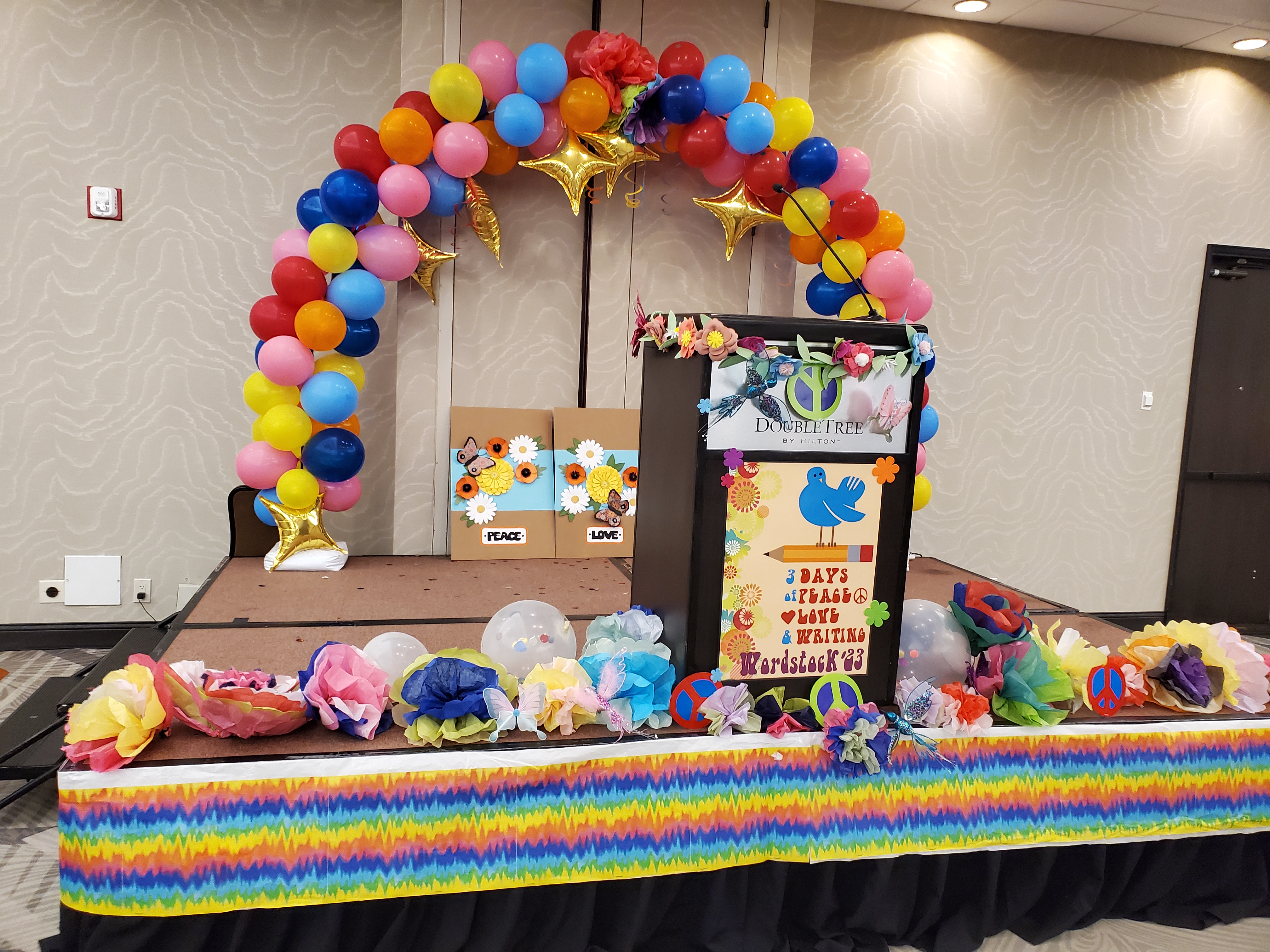
Pikes Peak Writers just finished up their 30th Annual Pikes Peak Writers Conference. The theme was Wordstock ’23, 3 Days of Peace, Love, and Writing. As president, it was my job to shake hands and kiss puppies. By puppies, I mean the wonderful Oski, faithful companion and service dog to Chris Mandeville, but I digress already (easily distracted by books and dogs). I had the freedom to roam the whole conference area, attend whatever workshops I wanted, and run errands throughout the hotel for my fellow volunteers working the conference along with talking with conference attendees.
A whole lot of volunteers are required to put the PPW conference on, including our conference director, Jenny Kate, our MC, Bowen Gillings, our programming director Karen Fox, our bookstore manager, Laura Hayden (second in command, James Knight), our registrar, Charise Simpson, our sponsor coordinator Nikia Hunt, our pitch coordinator Cara Allen, our webmaster, Sharon Manislovich, our wonderful and talented ballroom coordinator and creator of our theme, Rebecca Glesener Davis (aren’t these decorations just groovy?), and so many more. I wish I could name everyone, but that would make this post very long. Thanks to all the volunteers that helped make this conference possible, including those that just jumped in and helped out at the spur of the moment.
Me, Rebecca Glesener Davis, and Sharon Manislovich.
I talked to PPW members, non-members, agents, editors, and writers of every level from novice, to hobby, to indie, to traditionally published. This post is aimed at those that are newer to the writing game, writers conferences, and what to do after drinking from the fire hose that is a writers conference.
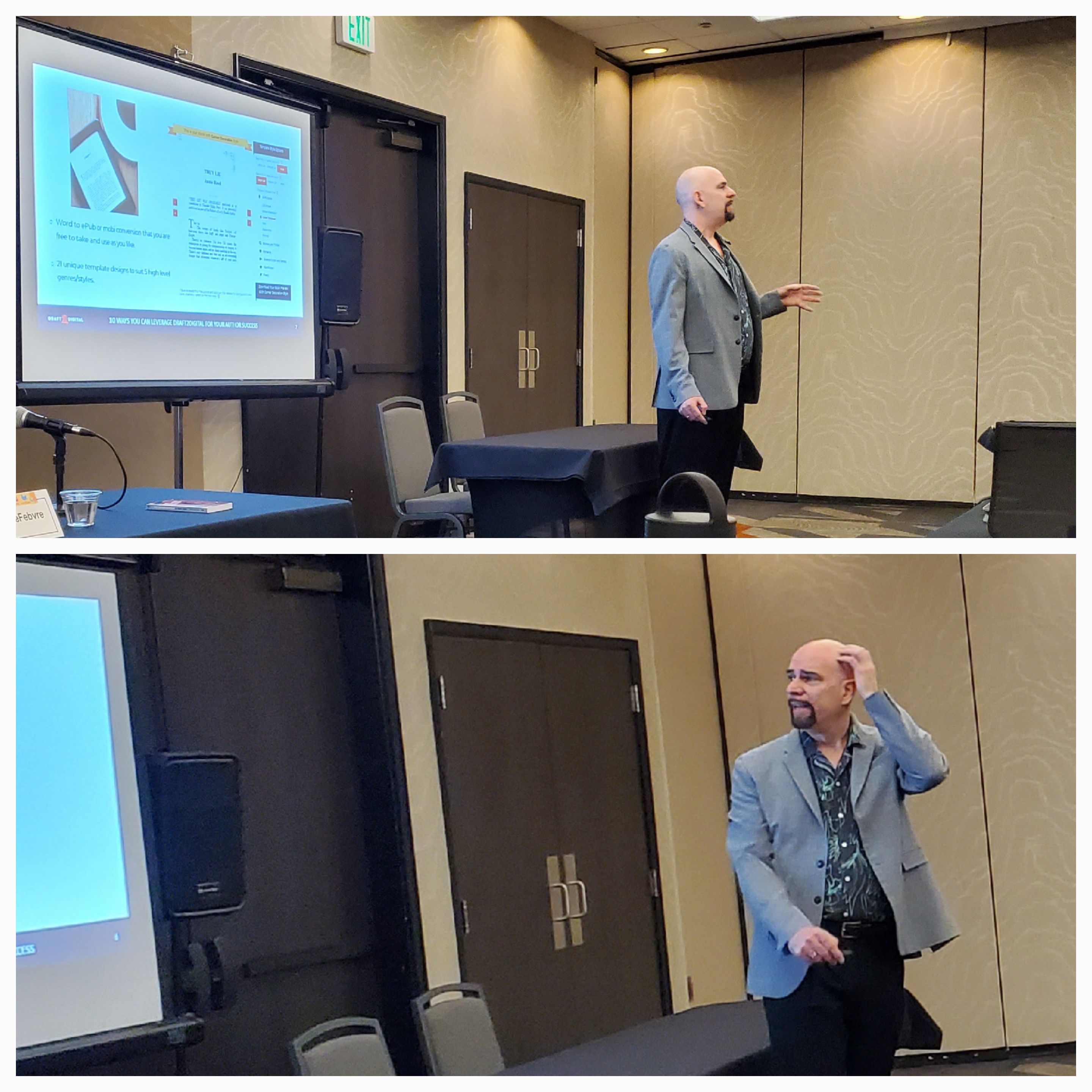
The ever informative and entertaining Mark Leslie Lefebvre!
Use the momentum of conference to your advantage. Use your enthusiasm to write that blog post, create a writing schedule, make your writing space as inviting to your process as possible, create an exercise routine, or, ya know, get words on the page. You can use the high energy of conference to help you for days, even a week after conference, which can help you begin to create good habits.
I take copious notes while at conference. My brain fog and memory issues have intensified after having Covid and my notes are more important than ever. My notes include everything from room numbers to notes from talking with other writers and the people that help us get our books into the hands of readers such as the wonderful Mark Leslie Lefebvre, director of business development at Draft2Digital. Who is both informative and entertaining and kindly gave me a whole lot of information about publishing anthologies with D2D. Prioritize your notes you took and take action on them starting with the most important. Add those book recommendations to your TBR pile, send a thank you note to those that helped you out, follow up with those you wanted to meet up with outside of conference. BUT don’t be an obnoxious stalker. Don’t send pages to anyone that didn’t specifically ask for them. Don’t add anyone to your mailing list that didn’t give you permission to do so. Don’t ask for favors unless you’re ready to return them. Don’t try to sell anybody anything.
Once you’ve got the post-conference work out of the way, it’s time for some pampering. Celebrate in whatever way your little writer heart loves.
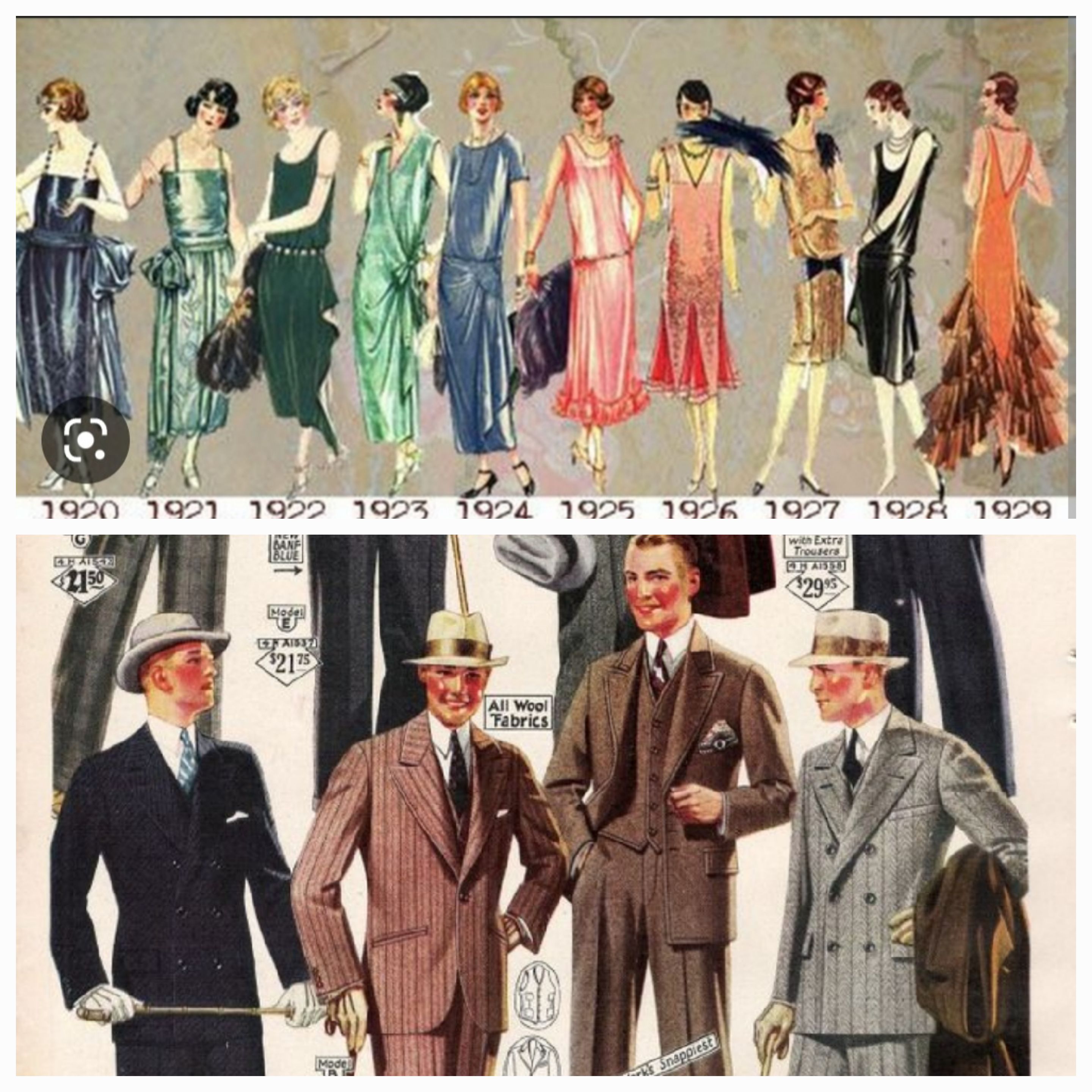
Get writing! I want to see your book in the bookstore next to mine next year when YOU attend Pikes Peak Writers Conference 2024! You can get a friends of Pikes Peak Writers discount until the end of May. Pull out your flapper dresses, fedoras & channel your inner Gatsby! Check it out!
Questions: What’s the first thing you do when you get home from conference? What do you miss the most about conference and how do you hold onto that until next time?
Hancock Historical Museum men’s and women’s fashion in the 1920s
Pikes Peak Writers (a 501(c)(3) organization) is committed to helping writers grow and thrive through education, outreach, and community.
I’m the president of my local writing organization, Pikes Peak Writers. The term is a minimum of two years and a maximum of six. Sound like an enormous commitment? We have volunteers who have been consistently volunteering in big ways with the organization since its inception in 1993. We are an all-volunteer organization with an all-volunteer board of directors. Volunteer time is dictated largely by the volunteer and the positions they want to fill. Heavy lifters are usually members of the board who fill at least one position in addition to their board position. We are what you would call a “working board”. We have volunteers at conference that just moderate a couple of workshops. One thing is true for them all. We value and appreciate their service no matter how much time they give. Here’s what volunteering with a writing organization can do for you.
1. Hang Out with Other Writers
Sometimes I try to talk to my husband about my latest writing dilemma and don’t get me wrong, he tries to be helpful, but let’s face it; no one understands the trials and tribulations of a writer better than another writer. It’s not good for you to spend so much time holed up in some room somewhere squirreling away your words. It’s important to put on some pants and go out and be social once in a while so why not go out and be social with people who understand? If you attend conferences and cons you’re almost guaranteed to make a new friend. Writing organizations are a great place to start.
2. Find Your Helpers
No matter your writing level or how you publish, a little help never hurt anyone. Beta readers, editors (did you know there’s different kinds of editors for different purposes?), critique groups, and more can all help improve your writing. The best part is that you get valuable input and insight and you get to decide what to use and what to keep. Write-ins are a great way to get some distraction-free writing time in. Most organizations have at least one write-in event or members who are running their own.
3. Encouragement, Support, and Advocacy
Writers are strange birds. It’s difficult to discuss our writing with others if they’re not writers. When I discuss whatever I’m writing with my husband, one of two things usually happens. 1. his eyes glaze over seconds after I start talking and he says “what?” 2. He is in middle management i.e. he is a problem solver. So he will try to solve my problem even though I’m just sharing a bit of my workday, much like he would do, not expecting me to solve his work problems for him. Events that your local writing organization puts on can be invaluable to you as a writer. These events give you the opportunity to rub elbows with agents, editors, and other writer of all levels. Some larger organizations advocate for new writers and the larger writer/reader community by providing grants to new writers, libraries, and independent book stores. Who knows? You may help another writer in some way you would never expect. A rising tide lifts all boats.
4. Opportunity and Education
Writing organizations often hold contests and give opportunities for scholarships to conference and other events. PPW gives scholarships to their annual conference and publishes anthologies with submissions consisting solely of stories submitted by members. In addition, PPW’s blog is full of useful and educational writing information submitted by members. Submitting to an anthology gives members a chance to learn about the publication process for authors from submitting to the contract to marketing after publication. Writing for an organization’s blog gives a writer experience in professional writing and an opportunity to market themselves by sharing. Most organizations will give you the rights to your post back within a relatively short period of time, giving you a ready-made post for your own blog a few months down the line. You can find information on other publishing avenues by connecting with fellow authors. For example, I learned about submissiongrinder.com from a fellow author who writes short stories. Writing organizations also present tons of opportunities to learn, from yearly conferences to workshops presented throughout the year on a nearly endless variety of subjects.
5. Connection
I wouldn’t be the author I am today without the connections I made through PPW. I went from being a complete novice and general member, to newsletter editor, to non-conference events director, and now I’m president. I’ll also be the project manager for the next anthology. Each of these positions, along with others I’ve held over the years (I wear many hats) have taught me so much about the art and business of writing and given me the opportunity to know some truly exceptional people. AND I became a published, award winning, international selling, author! I’m so grateful for these gifts. You don’t have to be an uber-volunteer like me, but getting involved as a volunteer is one of the best ways to connect with others within the organization and with, say it with me now–“agents, editors and other writers, oh my!”
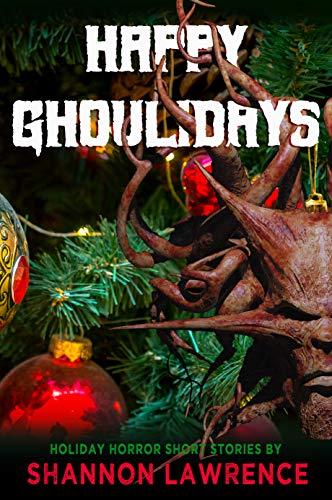
If you’re a horror fan and you haven’t read anything by Shannon Lawrence, you’re missing out. She is the author of four books of solo short stories full of chills, weirdness, and all manner of disturbing stuff that will keep you up at night. Her stories are featured in nearly forty anthologies. So when she came out with a book on how to do short stories right, people listened. Her latest addition to her solo horror collections, Happy Ghoulidays II, available via Barnes and Noble and Amazon, promises to be no exception.
BUT..what do we really know about the enigmatic short story force of nature that is Shannon Lawrence? Well, we know that she was in the car when a serial killer came after her mom in the 80s, has been nearly kidnapped a number of times as a kid, has been chased by a shark, and she writes all her short stories by hand. I wanted to know more (wouldn’t you?), so I posed some questions hoping to gain information that would allow us all to get to know the horror story powerhouse just a little bit better.
What literary pilgrimages have you gone on?
My favorite is probably The Stanley Hotel, which inspired King’s Overlook in The Shining. Not only have I stayed there, but had the movie running (they have a channel that runs the Kubrick film in a constant loop) while reading the book. And I wrote, of course, because it was a writing retreat. I love to go in February when it’s dead. Also, it’s an old hotel, and the ice slides off and makes the most terrifying sounds in the middle of the night, which is perfect at a haunted hotel.
What is your writing Kryptonite?
Depression. It has the ability to lock me down and make me unable to function, and therefore write (or do much else).
How did publishing your first story change your process of writing?
It energized me. I don’t think it changed my process, but it felt amazing, as did each acceptance afterward, and that kept me writing and submitting more.
What was the best money you ever spent as a writer?
Probably ISBNs for when I published my collections, because it ensured I kept my books in MY name, not Createspace’s or Amazon’s. As a seagull might say, “MINE!” I’d already given temporary first rights to those stories away. I had no desire to give any ownership to anyone else.
What are the most important websites/magazines/journals for writers to subscribe to?
An important website would be Duotrope if someone’s planning on submitting short stories. It’s an annual fee, and well worth it if you’re submitting enough stories.Otherwise, there’s a free website called Submission Grinder (at Diabolical Plots) that does the same thing. They may not have as many editors loading their publications as Duotrope, but it’s pretty close, so worth it if the annual Duotrope fee isn’t realistic for someone.
I also got Writer’s Digest for a while, but I learn more from other authors, I think, and I just never managed to make the time to read the magazine after a while. People are more honest about their processes on blogs and in personal conversation than when they write for Writer’s Digest for a paycheck.
What’s your favorite under-appreciated novel?
I’m not really sure which novels are unappreciated. I love One Flew Over the Cuckoo’s Nest, though, and re-read it every little once in a while. It was made into a movie, so probably not underappreciated, but I haven’t actually talked to many people who read it versus seeing the movie, so I’m counting it!
What was your hardest scene to write?
The death of a favorite character in a current WIP was hard to write. I didn’t want to let her go. I’ve written some pretty nasty things and plenty of hard things, but that’s freshest in my mind (because I’m in novel edits, and I JUST hit that scene today while editing, and it destroyed me all over again. And, of course, I knew it was coming, and started getting upset before it happened.)
What does literary success look like to you?
A growing readership. Each new person who discovers a story of mine and says something about it is a reminder of why I do this. Each story that sticks with someone is a success. Any time someone recommends a book or story of mine is a success. Each accomplishment, like an acceptance or a publication is another piece of success. My goals evolve, but the things that feel good and tell me I’m heading in a positive direction are the ones that matter.
Have you read anything that made you think differently about fiction?
Oh, I’m sure I’ve read many things that have impacted how I think about fiction, but I can’t think of an example. I feel like every good book I read tweaks how I feel in some way. Writers should be reading and learning and changing as they progress. I will say that The Handmaid’s Tale changed how I defined horror, and that set me in a new direction of learning what true horror was, because, in general, horror gets significantly pigeonholed in inaccurate ways. It was actually a piece by Nightmare Magazine listing the Top 100 Horror Novels, and when I started, there were novels that made me say, “This isn’t horror.” The Handmaid’s Tale made me pay attention to how wrong I was before. A lot of people wouldn’t consider it horror. Nightmare Magazine did. I do. Any woman who reads it should. Any man who cares about women must. And the thing is, when I started looking into the definition of horror, I found that places like the Horror Writer’s Association already preached that wider definition of horror. It’s just that so many people base their definition on slashers and Stephen King, which is limiting and erroneous. It’s so much more than that and, as it turns out, every book on that list was horror. I just needed to open my mind and learn. (Which doesn’t mean I liked every book on the list, though I’d like to go back and read the ones I bucked against and see what I think now.)
Do you hide any secrets in your books that only a few people will find?
here are references that people may get. For example, one of my earlier stories was anti-fan-fiction to a Hemingway story I had to spend way too much time with in middle school. Something like that, where it just depends on whether someone has experienced something or maybe sees something in a similar way to the way I do can be fun. It’s such a kick when someone contacts me to say they saw it (“Was this story based on Hemingway Novel X?”)
As a writer, what would you choose as your mascot/avatar?
My mascot would probably be a snake, the thing that both fascinates and terrifies me (in a phobic sense). I finally put one in this book, actually! I’m sure it won’t be the last time.
A fan of all things fantastical and frightening, Shannon Lawrence writes primarily horror and fantasy. Her stories can be found in over forty anthologies and magazines, and her three solo horror short story collections, Blue Sludge Blues & Other Abominations, Bruised Souls & Other Torments, Happy Ghoulidays are available now along with her nonfiction book, The Business of Short Stories. You can also find her as a co-host of the podcast “Mysteries, Monsters, & Mayhem.” When she’s not writing, she’s hiking through the wilds of Colorado and photographing her magnificent surroundings, where, coincidentally, there’s always a place to hide a body or birth a monster.
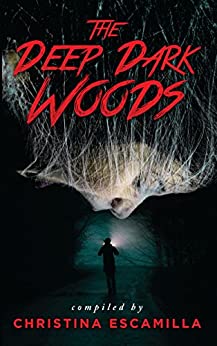
Want to learn more about Shannon and her books? Visit her website, The Warrior Muse to sign up for her newsletter and get the latest info on anthologies she’s been featured in such as The Deep Dark Woods seen above, and book releases.
Whether you’re a pantser or a plotter, you need to know about scene lists. This is a tool that can change your life as a writer. Pantsers don’t run away. I promise I’m not trying to convert you I’m trying to help you. Don’t be afraid of the big, bad spreadsheet program.
What Is a Scene List?
A scene list can be as simple or as thorough as you want it to be. As a pantser, you might just make a simple list of scenes in a spreadsheet program like Excel or Google Docs just for quick reference as to where something happened. Especially if you’re writing in a program like Word where you looking at one, large, running document. I mean, scrolling through a 100k Word document to see where you first hinted at that smoking gun has to be one of the most tedious and unnecessary actions one can be bored to tears doing. On the flip side, plotters, you’re probably already thinking about tracking all those pesky little details floating around outside of your beautiful outline.
What Can a Scene List Do for You?
Your scene list can be so useful that it can assist you from the maze of the (gasp) outline and first draft, all the way through the bog of revisions, bypassing the junk fields altogether, and right up to publishing castle. A scene list can help with everything from character traits to timelines.
Here’s the hand-written scene list from Joseph Heller’s novel Catch-22.
Looks complicated? It’s not. Remember all these squares were filled in over a long period of time. As writers we all know this stuff takes time and odds are it’s not going to look the same as when you first started. However, a scene list can help keep you on track. Especially when you’re wandering around in the purgatory of the soggy middle. Your scene list can put you back on track and moving forward.
Finally, you’re down to the nitty-gritty. It’s time for editing. But wait! You know there’s some missing scenes and some that need to be sent to the abyss. But which ones? Never fear! Your handy scene list is here! Need to drop that meaningful backstory comment that foreshadows why Jane is so afraid to let anyone get close? Browse your scene list. You know you have to pull that scene where that one thing happens that, as it turns out, is totally irrelevant to the story? Browse your scene list. You can highlight what you want to keep or toss in different colors, or highlight POV so you can track how much page-time your characters are getting. The possibilities are endless.
Get the most from your scene list
Here’s some information you might want to include to get the most out of your scene list (you can do more or less, or do it completely differently, it’s all up to you):
Scene number
Chapter the scene is found in
Estimated word count
Actual word count
A short scene summary
POV
Other characters involved
The scene’s structure
Date the scene takes place within the story
The setting in which the scene takes place
You can use a spreadsheet, some kind of outline form in a word processing program, the cork board in Scrivener, sticky notes on a wall or in a folder, graphing paper, or some other helpful writing tool you prefer. Your scene list can be the map to your novel, showing you all corners of the world you’re building and everything within it at a glance. Your all-seeing eye gazing into your newly forming world.
Stephen King does jigsaw puzzles, plays guitar, and bowls. Emily Dickenson loved baking. Agatha Christie traveled with her husband. E. Cummings painted. Jackie Collins is into soul music and photography.
Hobbies. Every writer could use one or two.
“Why would I need a hobby? Don’t I have enough to do as a writer?” You may ask.
While writers do have full schedules (surprisingly, “other” people do too), spending time on a hobby can be beneficial in many ways.
Certain hobbies help keep you healthy. Stephen King is among may writers who have been known to take a daily walk. Here in Colorado many writers have outdoor hobbies such as hiking, biking, running, paddle boarding, skiing, and much more. Physical hobbies help your body release feel-good chemicals in your brain and rid your body of toxins, helps you focus better, and sleep better, and that helps you write better. Plus, expending energy on physical hobbies, actually gives you more energy for everything else, including writing. Many times, these hobbies are combined with other hobbies like photography or camping.
I used to help out one of my hubby’s former employers with tagging merchandise. It sounds monotonous, poking those little plastic things with a tag through item after item, case after case of…stuff. Sounds downright mind-numbing right? Wrong! I had some of my most creative ideas when I was doing this work. Why? Because my inner critic was focused on doing the job and not poking myself with the tagging gun, which left my imagination unsupervised and free to make up whatever it wanted to. The same goes for seemingly repetitive hobbies like knitting or crocheting. These hobbies allow the mind to unwind and stretch out.
You need to get out among the people sometimes. Yes. I said it. You have to go OUT. Look, you can’t make good stories in a vacuum. If you’re not getting out once in a while, you’re missing the opportunity to gather valuable story fodder. Hobbies like spectator sports, joining a park and recreation softball league, a dart league, or just walking the mall make you get out amongst your fellow humans and help to remind you of how people act, for better or worse.
Hobbies help fill the well. When I’m relaxing with my hubby on the sofa watching TV and crocheting, just chilling, I’m filling the well. When I’m walking my dog or playing ball with her in the back yard, I’m refilling the well. When I’m chilling with a good book that I’m reading just for fun (yes, you should do this too), I’m refilling the well. Do whatever refills your well. Do it regularly. This is one of the most important things writers can do for themselves.
Finally, hobbies can help you overcome your writing problems. Have a sticky plot problem? Take a walk or play the guitar. Trying to figure out how best to get those love interests together? Go hang out at the mall and people watch the couples (but don’t be creepy about it, no one wants to be that person). Feeling stuck? Bake something, even if it’s cookies out of the refrigerated section at the grocery store, so that you can feel like you’ve accomplished something when you take the final product out of the oven.
So, my writer friends, if you haven’t already picked up the thing that helps you unwind or helps you get inspired, fear not! There are tons of things to do. Some of the writer I know do things like:
Photography
Hiking
Crochet
Video Games
Cooking
Reading (for pleasure)
Movies
Music
Playing and instrument
Drawing
Knitting
Painting
Puzzles
Camping
Board games
Role playing games
Make jewelry
Quilling
Calligraphy
Sewing
Needlepoint
Volunteer work
And many more! Think about what interests you and Google from there. The possibilities are seemingly endless.
Here ye! Here ye! It’s finally happened. I’ve published a novel! My debut cozy mystery has dropped on Amazon as an e-book. If you like snarky, capable female sleuths check it out. Only $2.99. Then feel free to drop a review and let me know what you thought.
There is only one way to accomplish this task. It must be done wirelessly over wifi. If you are reading this, you’ve likely tried the cable thing suggested in the instructions that came along with your new S7 and are already frustrated and annoyed. Especially if you replaced your Note7 with the “new” Note7 in the recall before the final recall. Or, as I like to refer to it, the mission abortion of the suicide bomber phones, but that’s a different discussion. For now, let me help you out with some hard-earned info. You can make the transfer without spending hours in a phone store or in an aggravated state of techno-red-hot-hatred at home.
In order to successfully migrate everything over to your new S7 you will need to find two things on you Note7.
Find the NFC and reset in Settings > Phone at the bottom of that list. You’re going to need to turn this on in order to transfer data wirelessly to your new device. Turn it on.
Find the Smart Switch application in Settings > Personal > Backup and reset. You’re going to need this to transfer all the applications to run and manage your phone. Click on Smart Switch to open and let that hang out for a bit.
From here, you can transfer the sim card from your Note7 to your S7 as stated in the instructions, start up your S7 and begin following the prompts. Take your time. Do this when you are not in a hurry to do anything or go anywhere. Save yourself some anxiety. Transfer times will vary with the amount of data and apps you have. Mine took a little under an hour. I don’t play games so I don’t have much in the way of apps, and I keep my music on an iPod, but I do have a ton of pictures.
It really can be that simple. Yes, you will put the phones back to back and yes there should be a sound when you do. Just keep an eye on it until both phones say they are done. The new one will be done last because it will be saving everything at the end.
That’s all there is to it. Have other tips to share about the Samsung S7, feel free to discuss below.









 K.A. Olgren Stories 'n' More